How I Fixed My Sleep Without Pills — Just Yoga and a Quiet Mind
Ever feel like your body’s running on empty no matter how long you sleep? I was there — tired all day, wired at night. Then I tried something simple: daily yoga and short meditation sessions. No drastic changes, just consistency. Within weeks, my energy shifted, my mood improved, and I started falling asleep naturally. This isn’t about perfection — it’s about rhythm. Let me share how aligning my routine with natural body cycles made all the difference.
The Modern Sleep Crisis: Why We’re Tired All the Time
Sleep has become one of the most elusive forms of self-care in modern life. Millions of adults report difficulty falling asleep, frequent nighttime awakenings, or waking up feeling unrefreshed despite spending enough hours in bed. These are not isolated struggles — they are symptoms of a widespread sleep crisis. The Centers for Disease Control and Prevention (CDC) recognizes insufficient sleep as a public health issue, with over one-third of American adults regularly sleeping fewer than seven hours per night. This lack of quality rest doesn’t just leave people feeling groggy; it undermines immune function, increases the risk of chronic conditions like hypertension and type 2 diabetes, and impairs emotional regulation.
One of the primary culprits behind poor sleep is lifestyle disruption. Constant exposure to artificial light, especially from screens, interferes with the brain’s ability to prepare for rest. Blue light emitted by smartphones, tablets, and televisions suppresses melatonin, the hormone responsible for signaling sleep onset. When we scroll through emails or watch late-night shows, our bodies receive conflicting messages — it’s dark outside, but the brain thinks it’s still daytime. This confusion delays the natural wind-down process and shifts the internal clock out of alignment. Over time, this leads to a condition known as circadian misalignment, where the body’s biological rhythms no longer match the environment.
Stress plays an equally significant role. Chronic psychological pressure keeps the nervous system in a state of high alert, activating the sympathetic “fight-or-flight” response even during rest hours. This makes it difficult to relax, let alone fall into deep, restorative sleep. Work demands, financial concerns, and caregiving responsibilities often leave little room for mental decompression. The result is a cycle of fatigue and hyperarousal — exhaustion during the day, alertness at night. Breaking this cycle requires more than willpower; it demands intentional practices that recalibrate both mind and body.
As awareness grows about the limitations and risks of long-term sleep medication use, many are turning to non-pharmacological solutions. Cognitive behavioral therapy for insomnia (CBT-I) has gained recognition as a first-line treatment, but complementary approaches like yoga and mindfulness are also gaining scientific support. These methods do not promise instant fixes, but they offer sustainable tools for restoring natural sleep patterns. Unlike pills, which may mask symptoms without addressing root causes, lifestyle-based strategies work with the body’s innate systems to promote lasting change.
Ancient Wisdom Meets Daily Life: What Chinese Holistic Health Teaches About Rest
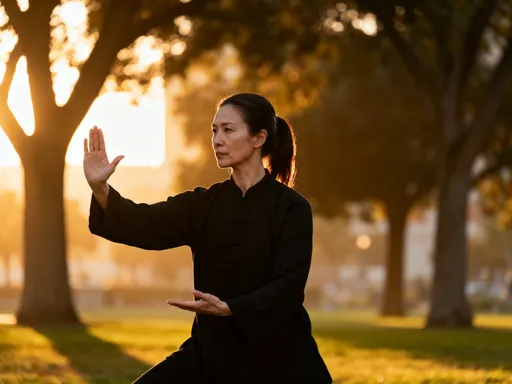
Long before modern sleep science existed, traditional Chinese health philosophy offered a comprehensive framework for understanding rest and vitality. At the heart of this system is 养生 (yangsheng), a concept that translates to “nourishing life.” Rather than treating illness after it occurs, yangsheng emphasizes prevention through daily habits that support balance and harmony within the body. Sleep is not seen as passive downtime but as an essential act of renewal, deeply connected to the flow of energy, or Qi (pronounced “chee”). According to this view, health flourishes when individuals live in rhythm with natural cycles — rising with the sun, eating at regular times, and winding down as daylight fades.
One of the most powerful teachings from traditional Chinese medicine (TCM) is the idea that the body follows a 24-hour Qi clock. Each organ system is believed to be most active during a two-hour window, influencing physical and mental functions throughout the day. For example, the liver’s peak activity occurs between 1 a.m. and 3 a.m., a time associated with detoxification and emotional processing. If a person consistently wakes during this period, TCM practitioners might interpret it as a sign of liver imbalance, often linked to stress or poor dietary choices. While Western medicine does not validate all aspects of the Qi clock, research in chronobiology confirms that organs do operate on circadian rhythms, regulating processes such as metabolism, hormone release, and cellular repair.
The alignment between ancient wisdom and modern science becomes even clearer when examining the role of routine. In TCM, irregular sleep patterns are seen as disruptive to Qi flow, leading to fatigue, irritability, and weakened immunity. Similarly, contemporary studies show that inconsistent bedtimes and wake times destabilize the circadian system, reducing sleep efficiency and increasing daytime sleepiness. The solution, according to both traditions, is consistency. Going to bed and waking up at roughly the same time every day — even on weekends — strengthens the body’s internal clock and enhances sleep quality over time.
This holistic perspective invites a shift in how we approach rest. Instead of viewing sleep as an isolated event, it encourages us to see it as part of a continuous cycle of activity and recovery. Just as a plant needs sunlight and water in balanced proportions, the human body thrives when rest is integrated into a rhythm of daily living. Practices such as gentle movement, mindful eating, and evening stillness are not luxuries but necessities for maintaining this balance. By reconnecting with these timeless principles, individuals can cultivate a lifestyle that naturally supports deeper, more restful sleep.
Why Yoga Works: More Than Just Stretching
Yoga is often misunderstood as a practice reserved for the flexible or spiritually inclined. In reality, its greatest benefits for sleep come not from complex poses but from its ability to regulate the nervous system. Gentle yoga, particularly when practiced in the evening, activates the parasympathetic nervous system — the branch responsible for “rest and digest” functions. This counteracts the overactivity of the sympathetic system, which dominates during periods of stress and alertness. Through deliberate movement and breath control, yoga creates a physiological shift that prepares the body for sleep.
One of the key mechanisms behind this effect is the influence of yoga on heart rate variability (HRV). Higher HRV is associated with better stress resilience and improved sleep quality. Slow, mindful movements combined with deep diaphragmatic breathing stimulate the vagus nerve, a major component of the parasympathetic system. This stimulation slows the heart rate, lowers blood pressure, and signals the brain that it is safe to relax. Unlike intense exercise, which can be energizing, restorative yoga focuses on relaxation and release, making it ideal for bedtime routines.
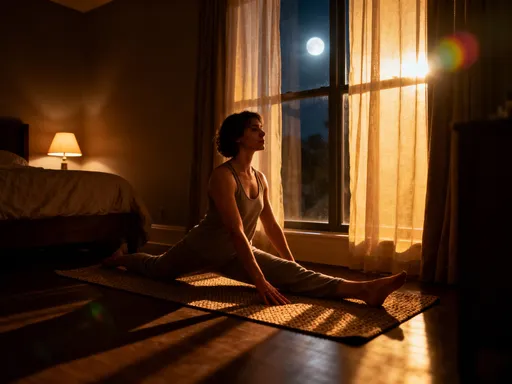
Several accessible poses are particularly effective for promoting sleep. Child’s pose (Balasana) gently stretches the back and hips while encouraging introspection and calm. Legs-up-the-wall pose (Viparita Karani) reverses blood flow, reducing swelling in the legs and calming the nervous system. Seated forward bends, such as Paschimottanasana, have a soothing effect on the spine and mind, helping to quiet mental chatter. Even simple lying-down stretches, like hugging the knees to the chest, can release tension stored in the lower back and pelvis — areas where stress often accumulates.
Importantly, yoga does not require special equipment or prior experience. A quiet corner of the bedroom, a mat or towel, and five to ten minutes are all that’s needed to begin. The emphasis is not on achieving perfect form but on cultivating awareness and ease. For many women in their 30s to 50s, who may carry the physical and emotional weight of caregiving, work, and household management, yoga offers a rare opportunity to turn attention inward. It becomes less about performance and more about presence — a nightly ritual of self-care that supports both physical comfort and mental clarity.
Meditation Without the Hype: A Realistic Approach to Calming the Mind
Meditation is often portrayed as a practice for monks on mountaintops or wellness influencers in serene studios. But for everyday people seeking better sleep, it can be remarkably simple and practical. The goal is not to achieve a blank mind or reach enlightenment; it is to create moments of stillness that allow the nervous system to reset. Even brief daily sessions — as short as five minutes — can reduce mental noise, ease anxiety, and improve the ability to fall asleep.
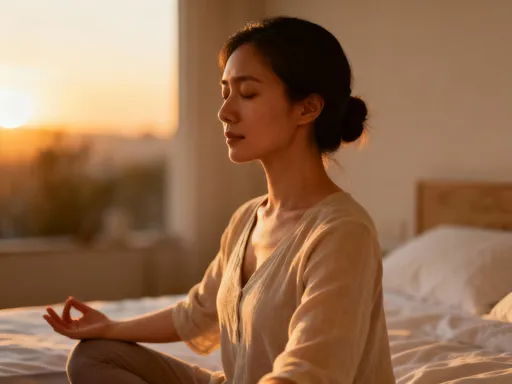
One of the most persistent myths about meditation is that it requires silence, special cushions, or hours of practice. In truth, consistency matters far more than duration or perfection. A woman sitting on her bed after putting the kids to sleep, focusing on her breath for just a few minutes, is practicing meditation. She doesn’t need to eliminate all thoughts; she simply needs to notice them without judgment and gently return her attention to the breath. This act of redirection strengthens the brain’s capacity for focus and emotional regulation, much like a muscle being exercised over time.
Several beginner-friendly techniques can support this process. Breath counting, for instance, involves inhaling and exhaling slowly while silently counting each breath up to ten, then starting over. This simple task anchors the mind in the present and prevents it from wandering into worries about the next day or regrets from the past. Another effective method is the body scan, where attention is gradually moved from the toes to the head, noticing sensations without trying to change them. This practice increases body awareness and helps identify areas of tension that may be interfering with relaxation.
For those who find silence challenging, guided meditations offer a helpful alternative. Numerous free and low-cost apps provide narrated sessions specifically designed for sleep, ranging from five to twenty minutes. These often include calming voice instructions, soothing background sounds, or progressive muscle relaxation techniques. The key is to find an approach that feels manageable and sustainable. Over time, the brain begins to associate these quiet moments with safety and rest, making it easier to transition into sleep. As with yoga, the power of meditation lies not in intensity but in regularity — small, repeated acts of stillness that gradually reshape the mind’s relationship with rest.
Building a Rhythm: How Small Habits Create Big Changes
Transformation in sleep rarely comes from dramatic overhauls. Instead, it emerges from the quiet power of routine. The human body thrives on predictability, and when rest is approached with consistency, even minor habits can yield significant results. The most effective changes are not those that demand hours of effort but those that fit seamlessly into daily life — small, repeatable actions that signal to the body and mind that it is time to slow down.
A simple evening wind-down routine can serve as the foundation for better sleep. About one hour before bedtime, reducing environmental stimulation is crucial. Dimming the lights mimics the natural decrease in daylight, prompting the brain to increase melatonin production. Turning off screens eliminates blue light exposure, removing a major barrier to sleep onset. This is not about eliminating technology entirely but about creating boundaries that protect rest. Even if household responsibilities continue, stepping away from devices for a short period allows the nervous system to begin its transition from activity to recovery.
Within this protected time, a combination of gentle yoga and meditation can be especially effective. Ten minutes of slow stretching followed by five minutes of breath-focused stillness creates a natural bridge between wakefulness and sleep. This sequence does not need to be elaborate — a few seated poses, a forward bend, and a moment of quiet breathing are sufficient. The repetition of this practice trains the brain to recognize these actions as cues for rest, much like a child learns to associate a bedtime story with sleep. Over time, the body begins to anticipate relaxation, making it easier to fall asleep without struggle.
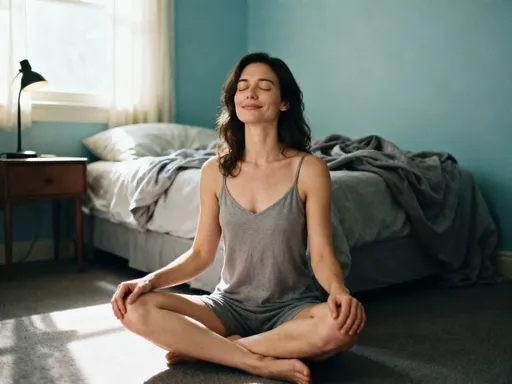
Morning habits also play a supportive role. Exposure to natural sunlight within the first hour of waking helps reset the circadian clock, reinforcing the body’s internal sense of day and night. A short walk outside, drinking tea near a window, or simply opening the curtains can provide this signal. Pairing light exposure with light movement — such as stretching or a brief walk — further strengthens the rhythm. These practices do not require extra time or effort; they simply involve making mindful choices within existing routines. When combined with evening rituals, they create a daily cycle that supports sustained energy during the day and deeper rest at night.
What Science Says: The Proven Benefits Behind the Practice
While personal experience can be compelling, scientific research provides valuable validation for the effectiveness of yoga and meditation in improving sleep. Multiple studies have demonstrated that regular practice leads to measurable improvements in sleep quality, reduced insomnia symptoms, and shorter sleep onset latency — the time it takes to fall asleep. A meta-analysis published in the journal *Sleep Medicine Reviews* found that mindfulness-based interventions significantly improved sleep outcomes across diverse populations, including older adults, cancer survivors, and individuals with chronic pain.
One of the most well-documented effects is the reduction of cortisol, the primary stress hormone. Elevated cortisol levels, especially in the evening, are strongly linked to sleep disturbances. Research shows that both yoga and meditation can lower cortisol production, promoting a calmer physiological state conducive to rest. Additionally, these practices support healthy melatonin release, helping the body maintain a natural sleep-wake cycle. A study in the *Journal of Clinical Endocrinology & Metabolism* found that participants who engaged in regular mindfulness practices experienced earlier melatonin onset and improved sleep efficiency.
Beyond sleep, the benefits extend to overall well-being. Improved mood, reduced anxiety, and enhanced cognitive function are commonly reported outcomes. These changes are not incidental; they are interconnected. Poor sleep exacerbates stress, and stress worsens sleep — creating a vicious cycle. By addressing the root cause of nervous system dysregulation, yoga and meditation help break this pattern. Over time, individuals report not only better sleep but also greater emotional resilience and mental clarity during the day.
It is important to note that results vary from person to person. Some may notice improvements within a week, while others may require several weeks of consistent practice. This approach is not intended as a replacement for medical treatment in cases of clinical insomnia or sleep disorders such as sleep apnea. However, for the majority of people experiencing mild to moderate sleep difficulties, it offers a safe, accessible, and evidence-based complement to conventional care. Healthcare providers increasingly recognize the value of integrative strategies, often recommending them as part of a holistic sleep improvement plan.
Making It Yours: Practical Steps to Start Tonight
Beginning a new habit can feel overwhelming, especially when fatigue is already high. The good news is that improving sleep through yoga and meditation does not require perfection or large time commitments. A realistic starting point is a 15-minute nightly sequence: five minutes of gentle yoga, five minutes of breath awareness, and five minutes of stillness. This can be done in bed or on a mat nearby, in comfortable clothing, with minimal preparation.
A sample routine might include seated neck rolls, shoulder stretches, a seated forward bend, and legs-up-the-wall pose. Afterward, lying on the back with hands resting on the belly, one can focus on slow, deep breaths — inhaling for four counts, exhaling for six. This extended exhale further activates the parasympathetic nervous system. If the mind wanders, gently returning to the breath is enough. There is no need to “clear” the mind; the act of noticing and redirecting is the practice itself.
Tracking progress can be helpful but is not required. Some may choose to keep a simple journal, noting how they felt before and after each session, or use a sleep-tracking app to observe trends over time. The most important factor is patience. Meaningful change typically takes two to four weeks of consistent practice. During this period, fluctuations are normal — some nights will still be restless, and that is okay. The goal is not to achieve perfect sleep every night but to build a sustainable rhythm that supports long-term well-being.
If sleep problems persist despite these efforts, it is important to consult a healthcare provider. Underlying medical conditions, medications, or sleep disorders may require professional evaluation. However, for many, the combination of gentle movement and mindful stillness offers a powerful path toward natural, restorative rest. By honoring the body’s need for rhythm and quiet, small daily choices can lead to profound transformation. Sleep is not something to be forced — it is something to be invited. And sometimes, the simplest practices are the most effective at opening the door.