How I Brought Calm Into My Daily Routine — A Real Look at Quick Qi Gong Habits
Ever feel like your day is running you instead of the other way around? I did—until I discovered how simple qi gong practices could quietly transform my habits. No drastic changes, just small, mindful moments woven into everyday life. This isn’t about magic fixes; it’s about consistency, awareness, and making space for balance. If you’re overwhelmed and seeking a natural way to recharge, this journey might resonate with you. For many women in their 30s, 40s, and 50s, life is a constant cycle of responsibilities—managing households, caring for children or aging parents, juggling work, and trying to maintain personal well-being. The idea of adding another task can feel exhausting. Yet, what if the very thing that restores your energy doesn’t require more time, but simply redefines how you use the time you already have? That’s where qi gong comes in—not as a performance, but as a gentle return to yourself.
The Burnout Breakthrough: Why Modern Life Needs Ancient Calm
In today’s world, the pace of daily life often feels relentless. The constant notifications, the mental load of planning meals, appointments, and family schedules, and the pressure to “do it all” can leave even the most organized woman feeling drained. Chronic stress isn’t just emotional—it manifests physically as tension in the shoulders, disrupted sleep, and a persistent sense of being on edge. This state of prolonged activation, often called burnout, is increasingly common among women balancing multiple roles. What many don’t realize is that the body wasn’t designed to stay in this heightened state indefinitely. It needs moments of reset, not just at the end of the day, but throughout it.
This is where ancient practices like qi gong offer a powerful, science-aligned solution. Originating in China over thousands of years ago, qi gong was developed as a way to preserve health, extend vitality, and support emotional equilibrium. Unlike intense workouts or complex meditation techniques, qi gong is accessible. It doesn’t demand hours of stillness or perfect conditions. Instead, it meets you where you are—standing in the kitchen, sitting at your desk, or pausing before bedtime. The philosophy behind it, known as 养生 (yangsheng), translates to “nourishing life.” It’s not about achieving peak performance but about cultivating sustainable wellness through small, daily acts of care.
What makes qi gong especially relevant today is its low barrier to entry. You don’t need special equipment, a quiet room, or even a change of clothes. It’s designed to fit into real life, not replace it. As more people seek natural, non-pharmaceutical ways to manage stress, practices like qi gong are gaining attention not as trends, but as time-tested tools. Research in mind-body medicine continues to validate what traditional systems have long understood: that breath, movement, and attention, when combined intentionally, can shift the nervous system from stress to calm. This isn’t about escaping life’s demands, but about building inner resilience so you can meet them with greater ease.
What Exactly Is Qi Gong—and Why It’s Not Just “Weird Breathing”
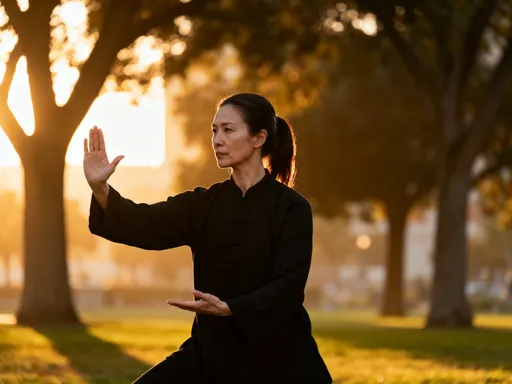
For many, the term “qi gong” brings up images of people in flowing robes moving slowly in parks, or assumptions that it’s something mystical or inaccessible. But at its core, qi gong is a practical system of coordinated body posture, movement, breathing, and focused intention. The word “qi” (pronounced “chee”) refers to vital energy or life force—the animating quality that keeps us alert, healthy, and responsive. In traditional Chinese medicine, qi flows through pathways in the body, and when it moves smoothly, we feel balanced. When it’s blocked or depleted, we may experience fatigue, tension, or emotional imbalance.
“Gong” means skill or practice—so qi gong is essentially “cultivating vital energy through practice.” This doesn’t require belief in any particular philosophy. Think of it like physical fitness for your nervous system. Just as lifting weights strengthens muscles, qi gong strengthens your capacity to regulate stress, improve circulation, and maintain mental clarity. It’s not about forcing energy or achieving supernatural states. It’s about creating conditions—through gentle motion and mindful breath—where your body can naturally restore itself.
One common misconception is that qi gong is the same as yoga or tai chi. While there are similarities, qi gong is often simpler and more adaptable. It can be practiced standing, sitting, or even lying down. Movements are typically smaller and repeated, making them easy to learn and integrate. Unlike high-intensity exercise, which stresses the body to build strength, qi gong emphasizes softness, flow, and internal awareness. It’s not about how far you can stretch or how long you can hold a pose, but about how present you are in each moment. This makes it especially suitable for women who may be managing physical discomfort, joint sensitivity, or simply the wear and tear of daily life.
Why Small Habits Beat Hour-Long Sessions (Science-Backed)
When we think of self-care, we often imagine setting aside 30 or 60 minutes for a workout, meditation, or spa-like ritual. But for most women, that kind of uninterrupted time is rare. The truth is, consistency matters more than duration. Studies in behavioral psychology show that habits formed through short, repeated actions are more likely to stick than those requiring large time commitments. A 2018 review published in the journal Health Psychology found that even brief mindfulness practices—three to five minutes daily—led to measurable reductions in cortisol, the primary stress hormone.
Another study from Harvard Medical School highlighted that micro-practices of breath and movement can activate the parasympathetic nervous system, which is responsible for the body’s “rest and digest” functions. This shift counteracts the “fight or flight” response that so many of us live in. The key is regularity: doing a little each day is more effective than doing a lot once a week. This is where qi gong shines. Because it’s gentle and brief, it can be woven into existing routines without disruption.
The concept of “habit stacking” makes this even easier. This technique involves linking a new behavior to an existing one. For example, after you brush your teeth in the morning, you might take three slow, deep breaths with your hands on your abdomen. Before you start the car, you might roll your shoulders and stretch your neck. These moments take less than a minute but create a cumulative effect over time. The brain begins to associate these small acts with transition points in the day, making them feel natural rather than forced. Over weeks, these micro-moments build a foundation of calm that supports you through the busier, more demanding parts of your day.
My Go-To Routine: 3 Simple Moves I Do Without Thinking
When I first started exploring qi gong, I was skeptical. I had tried meditation and yoga, but my mind was too busy, and my schedule too tight. What changed was finding a sequence so simple it felt almost effortless. Now, these three moves are as automatic as washing my hands. I do them in the morning while the kettle boils, during work breaks, or before bed. They take less than five minutes, but they reset my entire system.
The first is **gentle neck rolls**. I stand with my feet shoulder-width apart, hands resting at my sides. Slowly, I drop my right ear toward my right shoulder, holding for a breath, then roll my chin down and over to the left. I repeat this three times in each direction. This movement releases tension stored in the neck and shoulders—a common holding place for stress. It also improves circulation to the head, which can help with mental clarity and reduce headaches.
The second is **abdominal breathing**. I place one hand on my belly and inhale deeply through my nose, feeling my abdomen rise like a balloon. I exhale slowly through my mouth, feeling the belly fall. I repeat this for five to ten breaths. This type of breathing stimulates the vagus nerve, which helps regulate heart rate and digestion. It’s especially helpful when I feel anxious or overwhelmed. Even doing this for one minute can shift my mood from reactive to calm.
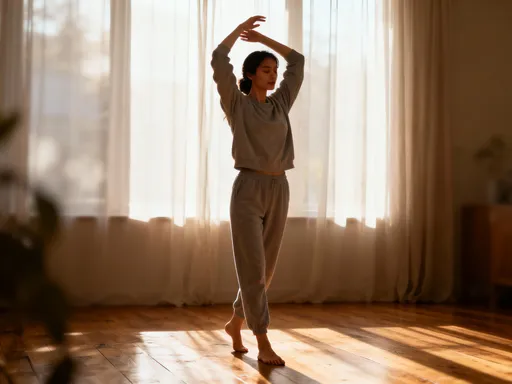
The third is the **“lifting the sky”** motion. I begin with my hands at my lower abdomen, palms up. As I inhale, I slowly raise my arms in front of me, then overhead, as if lifting an invisible ball of light. At the top, I pause, then exhale as I lower my hands back down. This movement encourages full lung expansion, improves posture, and creates a sense of upward energy. It’s grounding and uplifting at the same time. I often do this when I feel mentally sluggish or emotionally heavy. These three moves don’t require any special knowledge or equipment. They’re not about perfection—they’re about presence.
How to Make It Stick: Turning Practice Into Ritual
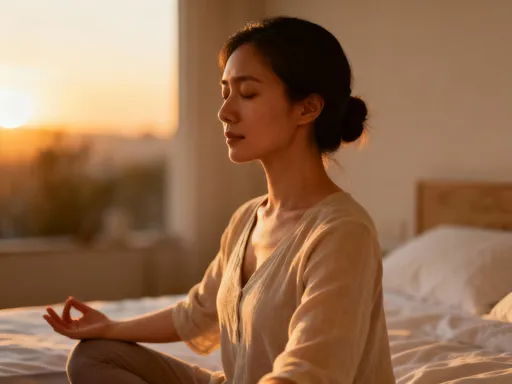
Starting is often the hardest part. Even with the best intentions, life gets in the way. The secret to making qi gong a lasting habit isn’t willpower—it’s design. By anchoring the practice to existing routines, it becomes part of your natural rhythm. For example, I linked my morning qi gong to making coffee. While the water heats, I do my three moves. It’s not an extra task; it’s a pause built into something I already do.
Another effective strategy is to choose a visual cue. I placed a small stone on my desk. Every time I see it, I take three deep breaths. It’s a silent reminder to check in with myself. On busy days, I adjust. If I can’t do the full sequence, I do just one breath or one stretch. The goal isn’t perfection, but continuity. Missing a day doesn’t mean failure—it means you’re human. What matters is returning without judgment.
Tracking progress can also help, but not in a rigid way. I used to mark a calendar with an X for each day I practiced. It wasn’t about filling in every box, but about seeing the pattern grow. Over time, the practice became less of a “should” and more of a “want.” I began to notice how much better I felt when I did it, which made me more likely to continue. The most important factor is self-compassion. Change takes time. Some days will feel easier than others. That’s normal. The practice isn’t about fixing yourself—it’s about showing up for yourself, consistently and kindly.
Signs It’s Working: The Subtle Shifts You Might Notice
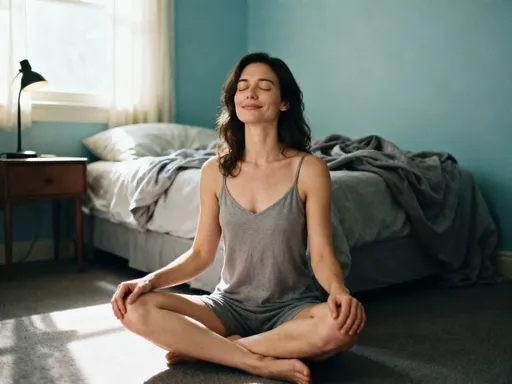
The benefits of qi gong aren’t always dramatic. You won’t suddenly feel euphoric or transformed overnight. Instead, the changes are gradual and deeply personal. One of the first things I noticed was better sleep. I used to lie awake with my mind racing, but after a few weeks of evening breathing exercises, I found it easier to wind down. I wasn’t trying to force sleep—I was simply creating the conditions for it to come naturally.
Another shift was in my physical comfort. My shoulders, which used to carry constant tension, began to relax. I didn’t realize how much I was holding until I felt the release. At work, I found I could focus longer without feeling mentally fatigued. I also handled minor frustrations—like traffic or last-minute changes—without reacting as strongly. It wasn’t that life became easier; it was that I became more resilient.
Some women report feeling more connected to their bodies, especially after years of neglecting their own needs. One friend shared that she started noticing when she was hungry or tired, rather than pushing through. Another said she felt less overwhelmed during family gatherings. These aren’t grand transformations, but they matter. They reflect a deeper alignment between body and mind. The practice doesn’t erase stress, but it gives you tools to navigate it with more grace. And that, over time, changes everything.
Beyond the Mat: How Qi Gong Changes Your Mindset Over Time
After several months of regular practice, I began to notice a shift that went beyond physical or emotional benefits. It was a change in how I related to myself. Qi gong taught me to slow down, to listen, to be present. It wasn’t about achieving a goal, but about being with myself in the moment. This sense of presence began to spill into other areas of life. I became more patient with my children, more attentive in conversations, and more forgiving of my own imperfections.
This is the deeper promise of qi gong: it’s not just a set of exercises, but a way of living. It cultivates awareness—the ability to notice when you’re rushing, when you’re holding your breath, when you’re disconnected from your body. And with awareness comes choice. You can choose to pause, to breathe, to reset. Over time, these small choices build a foundation of inner strength. You begin to trust yourself more. You learn that you don’t have to wait for the perfect moment to care for yourself. You can do it now, in the middle of the chaos.
For women who have spent years putting others first, this practice can feel revolutionary. It’s a quiet act of self-respect. It says, “I matter. My well-being matters.” And the more you practice, the more this belief takes root. It’s not about becoming someone else. It’s about returning to who you’ve always been—calm, capable, and deeply resilient. Qi gong doesn’t promise perfection. It offers something better: presence, balance, and the quiet power of showing up for yourself, one breath at a time.
True wellness isn’t found in extreme measures but in the quiet repetition of small, intentional acts. Qi gong, woven into daily life, offers a path not to perfection—but to presence, balance, and lasting vitality.